Sacramento Kings
2026-27 Cap Sheet • Western • Pacific
Over Cap, Below First Apron
First Apron
Thresholds
The first tax apron restricts teams from using the non-taxpayer MLE, bi-annual exception, and sign-and-trades to acquire players. Using a trade exception left over from a prior season hard-caps a team here, and so does taking back more salary than you send out in a trade. Teams above the first apron can only take back 100% of outgoing salary in trades.
Open in glossary →
Hard Capped at 1st Apron
Hard Cap
Fundamentals
A strict salary limit that cannot be exceeded under any circumstances. Teams become hard-capped by certain actions: using the NTMLE (hard-capped at first apron), using the BAE (first apron), receiving a sign-and-trade (first apron), or aggregating salaries (second apron).
Open in glossary →
In the CBA: Art. VII §2(e)(2)(i)(B)
bae
$0 left
· Precious Achiuwa
AVC Test
Viewing a shared scenario. Clone it to make your own edits.
Scenario Trades (3)
Trade with GSW
Valid
Sent: Domantas Sabonis, Malik Monk
Received: Jimmy Butler, Moses Moody
Picks in: 2027 Rnd 1, 2030 Rnd 2, 2032 Rnd 2
Trade with DEN
Valid
Sent: Precious Achiuwa
Received: Zeke Nnaji
Picks in: 2028 Rnd 2
Trade with BKN
Valid
Sent: De'Andre Hunter
Received: Drake Powell, Terance Mann
Picks in: 2030 Rnd 2
TPE: $5.9M
Team Salary
$188.0M
114.0% of cap
+ $36.2M cap holds
Cap Hold
Fundamentals
A placeholder amount charged against a team's cap for free agents whose rights they hold. Cap holds count toward team salary even though no contract exists. Teams must renounce a player's rights to remove the cap hold, but doing so means losing the ability to re-sign that player using Bird rights.
Open in glossary →
In the CBA: Art. VII §4(d)
$224.2M
Salary Cap
Salary Cap
Fundamentals
A spending threshold for player salaries, set annually by the NBA based on Basketball Related Income (BRI). The NBA uses a soft cap, so teams can exceed it using the CBA's exceptions.
Open in glossary →
$165.0M
Cap Space
Cap Space / Cap Room
Fundamentals
The difference between a team's current salary and the salary cap. Teams with cap space can sign free agents or absorb salary in trades without sending matching salary out.
Open in glossary →
In the CBA: Art. VII §2(b)(2)
-$23.0M
w/ holds:
-$59.3M
Tax Line
Luxury Tax Line
Thresholds
The salary threshold above which teams must pay the luxury tax. A team can be over the salary cap without paying tax.
Open in glossary →
$200.4M
Tax Bill
Luxury Tax
Fundamentals
A financial penalty paid by teams whose tax team salary exceeds the luxury tax line. Tax rates increase with each bracket and are higher for repeat taxpayers.
Open in glossary →
$0
Roster
Roster Limits
Roster
From opening night through the end of the regular season (or a team's last play-in or playoff game), a team must carry 14 or 15 players on standard contracts. It may drop to 12 or 13 for up to two weeks at a time and 28 days in all, and may go above 15 only in rare cases such as a league hardship exception. A team may also carry up to 3 two-way players, who do not count toward those limits. Outside that period, a team may carry up to 21 players, two-way players included. From July 1 until the regular season starts, a team with fewer than 12 players in its team salary (counting cap holds and unsigned first-round picks) is charged a rookie minimum salary for each missing spot.
Open in glossary →
16/15
+2/3
- Estimated Apron Salary
- $187,978,029
- First Apron
- $21,036,971 under
- Second Apron
- $33,707,971 under
Documented unlikely incentives $0 Contracts using payroll amounts 13 Contracts with projected incentives 3
Cap Position
Cap
Tax
1st
2nd
HARD CAP
Hard Cap
Fundamentals
A strict salary limit that cannot be exceeded under any circumstances. Teams become hard-capped by certain actions: using the NTMLE (hard-capped at first apron), using the BAE (first apron), receiving a sign-and-trade (first apron), or aggregating salaries (second apron).
Open in glossary →
In the CBA: Art. VII §2(e)(2)(i)(B)
at $209.0M
· Bi-Annual Exception
($21.0M room)
Cap
Salary Cap
Fundamentals
A spending threshold for player salaries, set annually by the NBA based on Basketball Related Income (BRI). The NBA uses a soft cap, so teams can exceed it using the CBA's exceptions.
Open in glossary →
$165.0M
Tax
Luxury Tax Line
Thresholds
The salary threshold above which teams must pay the luxury tax. A team can be over the salary cap without paying tax.
Open in glossary →
$200.4M
1st Apron
First Apron
Thresholds
The first tax apron restricts teams from using the non-taxpayer MLE, bi-annual exception, and sign-and-trades to acquire players. Using a trade exception left over from a prior season hard-caps a team here, and so does taking back more salary than you send out in a trade. Teams above the first apron can only take back 100% of outgoing salary in trades.
Open in glossary →
$209.0M
2nd Apron
Second Apron
Thresholds
The second tax apron imposes the strictest restrictions. Teams above it cannot: aggregate salaries in trades, send cash in trades, use any MLE, send players via sign-and-trade, use a trade exception left over from a prior season, or trade first-round picks 7 years out. Their distant first-round picks are also "frozen."
Open in glossary →
$221.7M
Team $188.0M
w/ Holds
Cap Hold
Fundamentals
A placeholder amount charged against a team's cap for free agents whose rights they hold. Cap holds count toward team salary even though no contract exists. Teams must renounce a player's rights to remove the cap hold, but doing so means losing the ability to re-sign that player using Bird rights.
Open in glossary →
In the CBA: Art. VII §4(d)
$224.2M
Cap Hold
Fundamentals
A placeholder amount charged against a team's cap for free agents whose rights they hold. Cap holds count toward team salary even though no contract exists. Teams must renounce a player's rights to remove the cap hold, but doing so means losing the ability to re-sign that player using Bird rights.
Open in glossary →
In the CBA: Art. VII §4(d)
Season
Swipe salaries to change year. Contract totals include remaining option years, not cap holds.
| # | Player | Pos | Age | 26-27 | 27-28 | 28-29 | 29-30 | 30-31 |
|---|---|---|---|---|---|---|---|---|
| 1 |
 Jimmy Butler
via GSW |
SF | 37 | $56.8M | $44.0M | |||
| 2 |
 Keegan Murray |
PF | 26 | $24.1M | $26.1M | $28.0M | $29.9M | $31.9M |
| 3 |
 Terance Mann
via BKN |
SG | 30 | $15.5M | $16.0M | $19.2M | ||
| 4 |
 Moses Moody
via GSW |
SG | 24 | $12.5M | $13.4M | $16.1M | ||
| 5 |
 Darius Acuff Jr. |
PG | 20 | $8.0M | $8.4M | $8.8M TO | $11.2M TO | $33.6M |
| 6 |
 Zeke Nnaji
via DEN |
C | 25 | $7.5M | $7.5M PO | $9.0M | ||
| 7 |
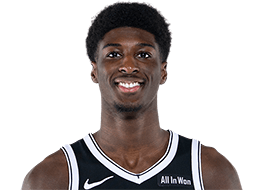 Drake Powell
via BKN |
SF | 21 | $3.5M | $3.7M TO | $6.1M TO | $7.3M | |
| 8 |
 Alex Karaban |
PF | 24 | $2.9M | $3.1M | $3.2M TO | $5.9M TO | $17.6M |
| 9 |
 Brandon Williams |
PG | 27 | $2.5M MIN | ||||
| 10 |
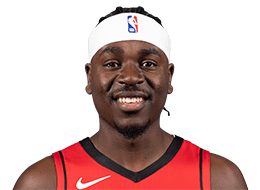 Aaron Holiday |
PG | 30 | $2.5M MIN | ||||
| 11 |
 Nick Richards |
C | 28 | $2.5M MIN | ||||
| 12 |
 Daeqwon Plowden |
SG | 28 | $2.4M | $2.7M | $2.8M | ||
| 13 |
 Ben Simmons |
PF | 30 | $2.4M NG | $2.6M | |||
| 14 |
 Maxime Raynaud |
C | 23 | $2.2M | $2.5M TO NG | $4.8M | ||
| 15 |
 Dylan Cardwell |
PF | 24 | $2.2M | $2.5M NG | $2.7M TO NG | $5.2M | |
| 16 |
 Mason Plumlee |
C | 36 | $2.1M NG | $2.6M | |||
|
Dead Money
(2 players)
|
||||||||
|
DeMar DeRozan
Bought Out
|
$3.3M | $3.3M | $3.3M | |||||
 Zach LaVine
Bought Out |
$35.0M | |||||||
|
Two-Way Contracts
(2 of 3 slots • not counted against the cap or the 15-man roster)
|
||||||||
 Leaky Black
Two-Way |
SF | 27 | $678K | $2.3M | ||||
 Jonathan Mogbo
Two-Way |
PF | 25 | $678K | $2.3M | ||||
| Spots opened by expiring deals | 2 × $1.5M | 7 × $1.6M | 9 × $1.8M | |||||
| Total | $188.0M ($224.2M) | $89.2M ($143.1M) | $52.2M ($107.2M) | $47.0M ($71.1M) | $31.9M ($98.9M) | |||
| Cap Space | -$59.3M | $32.9M | $80.6M | $129.3M | $114.9M | |||
| 1st Apron Space | $21.0M | $133.8M | $185.7M | $206.9M | $239.0M | |||
| 2nd Apron Space | $33.7M | $147.3M | $200.1M | $222.3M | $255.5M | |||
Legend:
Regular = under contract • Orange
=
Cap Hold
Fundamentals
A placeholder amount charged against a team's cap for free agents whose rights they hold. Cap holds count toward team salary even though no contract exists. Teams must renounce a player's rights to remove the cap hold, but doing so means losing the ability to re-sign that player using Bird rights.
Open in glossary →
In the CBA: Art. VII §4(d)
• Blue
= projected/edited • Struck
= option declined • PO
Player Opt • TO
Team Opt • ETO
Early Term • NG
= non-guaranteed •
26-27 uses the league's published cap figures