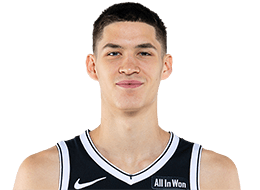
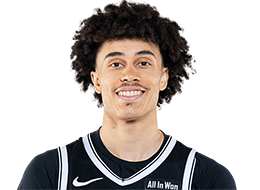
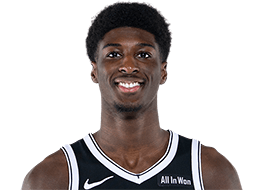
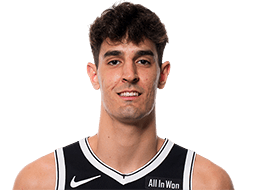
2026-27 The league's active season. Trades, cap positions, and scenarios are computed against it.

Brooklyn Nets

2026-27 Cap Sheet • Eastern • Atlantic

About this cap sheet

Explore Brooklyn Nets's contracts, future payroll, draft picks, cap holds, and exceptions. Salary, cap holds, and available spending exceptions are different measures; a team's payroll alone does not determine its available cap room. Cap holds explained · Data and methodology

Under the Cap Cap Space / Cap Room Fundamentals The difference between a team's current salary and the salary cap. Teams with cap space can sign free agents or absorb salary in trades without sending matching salary out. Open in glossary → In the CBA: Art. VII §2(b)(2)

Want to reshape this roster?

Create a custom scenario to make trades, sign free agents, and edit the roster without changing the real cap sheet.

Team Salary
$160.1M
97.0% of cap
Salary Cap Salary Cap Fundamentals A spending threshold for player salaries, set annually by the NBA based on Basketball Related Income (BRI). The NBA uses a soft cap, so teams can exceed it using the CBA's exceptions. Open in glossary →
$165.0M
Cap Space Cap Space / Cap Room Fundamentals The difference between a team's current salary and the salary cap. Teams with cap space can sign free agents or absorb salary in trades without sending matching salary out. Open in glossary → In the CBA: Art. VII §2(b)(2)
$4.9M
Tax Line Luxury Tax Line Thresholds The salary threshold above which teams must pay the luxury tax. A team can be over the salary cap without paying tax. Open in glossary →
$200.4M
Tax Bill Luxury Tax Fundamentals A financial penalty paid by teams whose tax team salary exceeds the luxury tax line. Tax rates increase with each bracket and are higher for repeat taxpayers. Open in glossary →
$0
Roster Roster Limits Roster From opening night through the end of the regular season (or a team's last play-in or playoff game), a team must carry 14 or 15 players on standard contracts. It may drop to 12 or 13 for up to two weeks at a time and 28 days in all, and may go above 15 only in rare cases such as a league hardship exception. A team may also carry up to 3 two-way players, who do not count toward those limits. Outside that period, a team may carry up to 21 players, two-way players included. From July 1 until the regular season starts, a team with fewer than 12 players in its team salary (counting cap holds and unsigned first-round picks) is charged a rookie minimum salary for each missing spot. Open in glossary →
15/15 +3/3
Estimated Apron Salary
$160,056,358
First Apron
$48,958,642 under
Second Apron
$61,629,642 under

Documented unlikely incentives $0 Contracts using payroll amounts 6 Contracts with projected incentives 9

Cap Position

Cap
Tax
1st
2nd
Salary cap $165.0M Teams above this line can no longer use cap space to add salary. They sign and trade using exceptions instead. Luxury tax line $200.4M Total salary above this line is taxed, at escalating rates the further over you go. First apron $209.0M A hard ceiling for some moves. Above it a team loses the bi-annual exception, sign-and-trade acquisitions, and the full mid-level. Second apron $221.7M The harshest tier. Above it a team loses aggregation, the taxpayer mid-level, and can have future first-round picks frozen.
Cap Salary Cap Fundamentals A spending threshold for player salaries, set annually by the NBA based on Basketball Related Income (BRI). The NBA uses a soft cap, so teams can exceed it using the CBA's exceptions. Open in glossary → $165.0M Tax Luxury Tax Line Thresholds The salary threshold above which teams must pay the luxury tax. A team can be over the salary cap without paying tax. Open in glossary → $200.4M 1st Apron First Apron Thresholds The first tax apron restricts teams from using the non-taxpayer MLE, bi-annual exception, and sign-and-trades to acquire players. Using a trade exception left over from a prior season hard-caps a team here, and so does taking back more salary than you send out in a trade. Teams above the first apron can only take back 100% of outgoing salary in trades. Open in glossary → $209.0M 2nd Apron Second Apron Thresholds The second tax apron imposes the strictest restrictions. Teams above it cannot: aggregate salaries in trades, send cash in trades, use any MLE, send players via sign-and-trade, use a trade exception left over from a prior season, or trade first-round picks 7 years out. Their distant first-round picks are also "frozen." Open in glossary → $221.7M Team $160.1M
Season

Swipe salaries to change year. Contract totals include remaining option years, not cap holds.

# Player Pos Age 26-27 27-28 28-29 29-30 30-31
1
Michael Porter Jr.
SF · 1 yr · $40.8M left
SF 28 $40.8M $44.0M
2
Julius Randle
PF · 2 yrs · $69.1M left
PF 31 $33.3M $35.8M PO $53.7M
3
Terance Mann
SG · 2 yrs · $31.5M left
SG 30 $15.5M $16.0M $24.0M
4
Day'Ron Sharpe
C · 2 yrs · $20.0M left
C 25 $10.0M $10.0M TO NG $19.0M
5
Keon Ellis
SG · 2 yrs · $18.0M left
SG 26 $9.0M $9.0M TO $11.7M
6
Moritz Wagner
C · 2 yrs · $18.5M left
C 29 $9.0M $9.5M $18.0M
7
Mikel Brown Jr.
PG · 4 yrs · $39.9M left
PG 20 $8.8M $9.2M $9.7M TO $12.3M TO $36.8M
8
Egor Demin
SG · 3 yrs · $24.5M left
SG 20 $7.2M $7.6M $9.6M TO $28.9M
9
Noah Clowney
PF · 1 yr · $5.4M left
PF 22 $5.4M $16.2M
10
Josh Minott
SF · 2 yrs · $9.0M left
SF 24 $4.5M $4.5M TO NG $8.6M
11
Nolan Traore
PG · 3 yrs · $14.7M left
PG 20 $4.0M $4.2M $6.5M TO $19.4M
12
Drake Powell
SF · 3 yrs · $13.4M left
SF 21 $3.5M $3.7M $6.1M TO $18.3M
13
Ben Saraf
PG · 3 yrs · $11.9M left
PG 20 $3.0M $3.2M $5.7M TO $17.2M
14
Joshua Jefferson
PF · 4 yrs · $15.3M left
PF 23 $3.0M $3.1M $3.3M TO $5.9M TO $17.7M
15
Danny Wolf
C · 3 yrs · $11.6M left
C 22 $2.9M $3.1M $5.6M TO $16.7M
Two-Way Contracts (3 of 3 slots • not counted against the cap or the 15-man roster)
Tyler Bilodeau Two-Way
PF 22 $678K $2.3M
Chaney Johnson Two-Way
SG 24 $678K $2.3M
Grant Nelson Two-Way
PF 24 $678K $2.3M
Spots opened by expiring deals 5 × $1.6M 10 × $1.8M
Total $160.1M ($160.1M) $118.8M ($186.1M) $46.4M ($181.3M) $18.2M ($126.8M) $0 ($72.1M)
Cap Space $4.9M -$10.1M $6.5M $73.5M $141.7M
1st Apron Space $49.0M $104.2M $191.5M $235.7M $270.9M
2nd Apron Space $61.6M $117.7M $206.0M $251.1M $287.3M
Legend: Regular = under contract • Orange = Cap Hold Fundamentals A placeholder amount charged against a team's cap for free agents whose rights they hold. Cap holds count toward team salary even though no contract exists. Teams must renounce a player's rights to remove the cap hold, but doing so means losing the ability to re-sign that player using Bird rights. Open in glossary → In the CBA: Art. VII §4(d) • Blue = projected/edited • Struck = option declined • PO Player Opt • TO Team Opt • ETO Early Term • NG = non-guaranteed • 26-27 uses the league's published cap figures

Teams

More

Community Trade ideas and community discussions Current challenges How challenges are graded Explore the six pillars of a good GM
Browse
Team Contracts Player Contracts FA Market
App
Install app

Open trades and cap sheets straight from your home screen in their own app window.

iPhone or iPad

In Safari, open the Share menu, choose Add to Home Screen, then tap Add. Keep Open as Web App enabled if shown.

Android or desktop

Use Install Armchair GM above when available, or open your browser menu and choose Install app or Add to Home screen.

An internet connection is required for live data, trades, and scenario changes.

What's new About
Account
Sign in Tip jar Support Armchair GM